
ARTICLE - Beyond MIDI: Why Live Musicians Bring Emotions No Plug-In Can.

Updated: Dec 28, 2025
The Human Touch in Music Composition: Why Live Musicians Matter
In an age where technology offers composers near-limitless possibilities, there’s still one element that remains irreplaceable: the human touch.
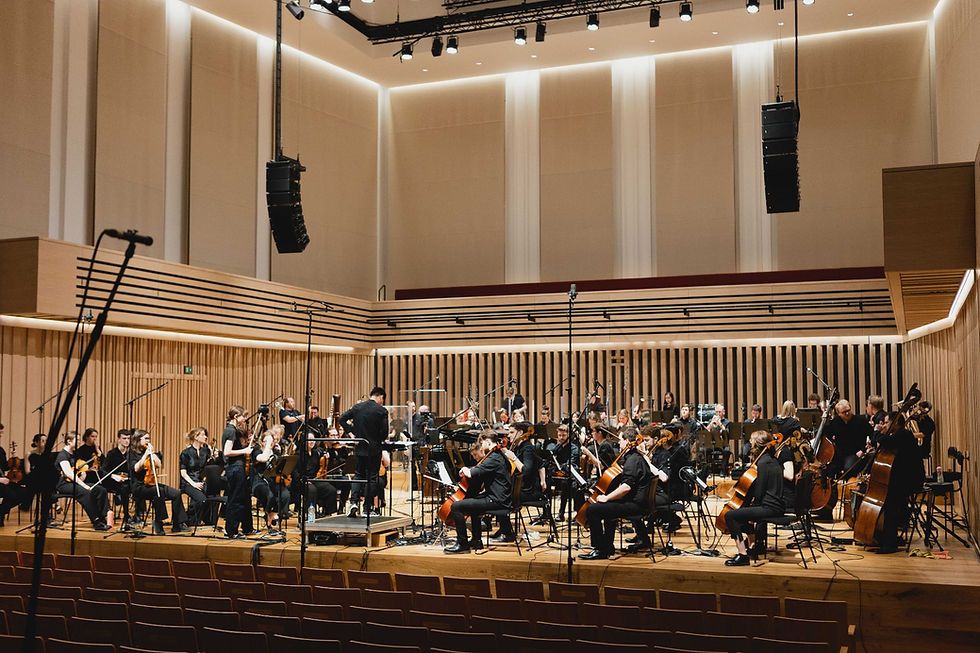
There is a kind of magic that happens when your music is brought to life by real musicians. The experience of hearing a living, breathing orchestra perform your work is unforgettable. It’s emotional. And it’s something that every composer, whether writing for film, games, or television, should experience at least once.
After all, music was never meant to live inside a computer. It was designed to be played, felt, and shared.

The Rise of the Simulation
There’s no denying it; modern sample libraries are incredible. We’re living in an age where composers can access the sound of world-class orchestras from their laptops. These tools have opened doors for countless artists, increasing accessibility to orchestral music. In fact, many of us at NFO first fell in love with orchestral writing through these very libraries.
However, as advanced as they’ve become, sample libraries are still simulations. They can emulate expression, dynamics, and tone, but they can’t respond. They don’t breathe, anticipate, or feel. Working with a virtual orchestra is ultimately a one-way conversation. You control every detail, but the software never speaks back.
When you step into a session with real musicians, everything changes. You’re no longer working with samples; you’re collaborating with artists. Each player brings their own experience, instincts, and years of craft to the table. They don’t just simply play the notes; they interpret them, react to them, and infuse them with emotion.
That dialogue—the spontaneous feedback loop between composer and performer—is where the true magic of music happens.

The Value of Working with Live Players
Recording with live musicians isn’t just about achieving a “better” sound (though that’s certainly true). It’s about growth as an artist and as a storyteller.
Every live recording session is like a mini masterclass in orchestration, phrasing, and communication. You learn how your music breathes in the hands of professionals. You hear what works and what doesn’t. You see firsthand how tiny articulations, tempo shifts, and bowing techniques can transform the emotional impact of a cue. This is the kind of education no tutorial or plug-in can offer. It’s learning through collaboration, discovery, and creative dialogue.
And yes, hiring live musicians is an investment. But it’s one that pays off in ways far beyond the immediate project. It elevates your craft, deepens your musical instincts, and helps you connect with your audience on a human level.
Instincts, Inspiration, and the Human Connection
There’s something indescribably inspiring about standing in a room surrounded by musicians. The quiet rustle of pages, the faint sound of tuning, and the first downbeat of your score create a moment of connection that cuts through the noise of modern technology.
Working with live players hones your instincts in ways software never could. You start to hear and feel music differently. You become more attuned to nuance, phrasing, and the subtleties that make a piece truly come alive.
And most importantly, you remember why you started composing in the first place. It’s not just about perfection. It’s about expression and emotion. It’s about telling a story that moves people, and that’s something only living, breathing musicians can deliver.

The Future of Music Composition
As technology continues to evolve, the role of live musicians in composition remains crucial. The future of music lies in the balance between digital innovation and human artistry. Composers must embrace both worlds to create truly impactful music.
Imagine a future where composers seamlessly blend the precision of technology with the warmth of live performance. This hybrid approach could lead to groundbreaking compositions that resonate deeply with audiences.
In this future, the human touch will always be essential. It’s the heartbeat of music, the element that makes a piece unforgettable.
Conclusion: The Future Is Human
We’re not here to dismiss technology; far from it. Sample libraries and virtual instruments are incredible assets. They’re part of a composer’s toolkit, and they can take you far.
But they’re not the destination; they are the bridge. At the end of that bridge lies something more powerful: the human performance. The unpredictable, emotional, irreplaceable heart of music.
So next time you’re working on a score, ask yourself: what would this sound like if it were alive? Because beyond the MIDI data and digital precision, there’s a heartbeat waiting to be heard.
Contact - jack@northernfilmorchestra.com
Soundcloud - https://soundcloud.com/nforchestra
Twitter - https://twitter.com/NFOrchestra



Comments