
From Studio Session to 1 Million Streams: How Benjamin Cook Built a Global Audience as an Independent Composer.

Benjamin Cook is a pianist and composer who has carved out a distinctive space between contemporary classical and cinematic music. Over the past few years, his work has resonated with a rapidly growing global audience, not through label backing or viral shortcuts, but through patience, consistency, and a deep belief in the power of live-recorded music.

Blending neoclassical piano with expressive string writing, Benjamin’s music sits in a world that feels intimate yet expansive. Today, that sound has helped him surpass 1 million streams across platforms and build a social following of over 150,000 listeners, entirely independently.
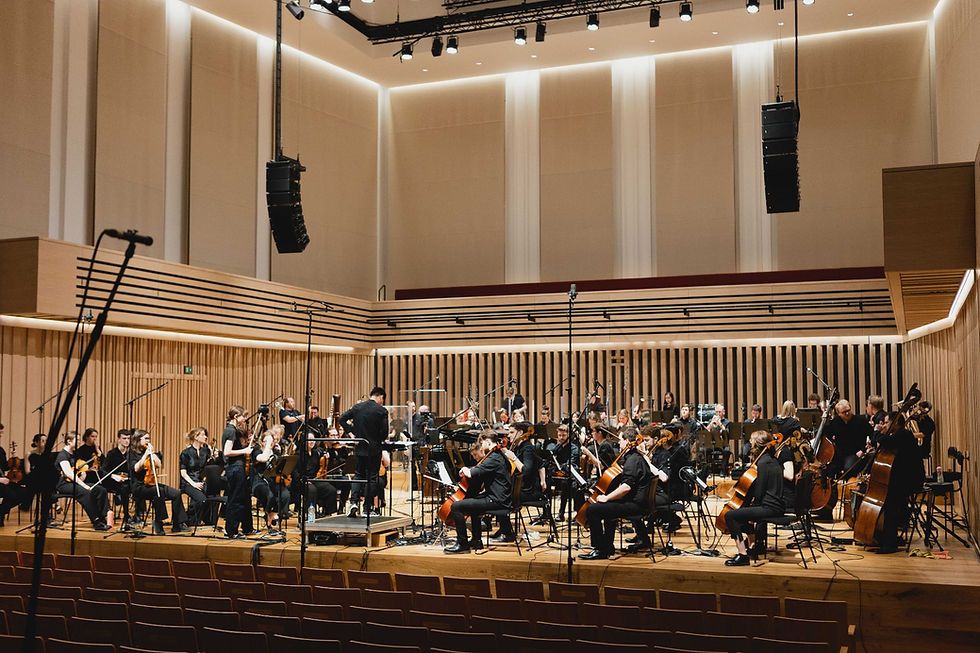
Our journey with Benjamin began in August 2021, when he booked his first string recording session with the Northern Film Orchestra. Two years later, we reunited for a second session to capture the lush, emotive arrangements for his breakout EP, Ascension.
In this interview-led feature, we reflect on that journey, from Benjamin’s early classical training and COVID-era creative reset, to the specific strategies that allowed his music to grow steadily, authentically, and sustainably.
"You have to be comfortable being ignored."
Benjamin Cook
Finding an Artistic Voice Through Ownership
Like many composers, Benjamin’s early career was focused on writing for others. After studying piano and completing degrees in performance and composition for screen, much of his output lived behind the scenes, short films, library music, and commercial briefs.
The turning point came during the COVID lockdowns. With the industry paused and time finally available, Benjamin realised he had never fully committed to writing music for himself.
That shift, from service-based composing to artistic ownership, proved transformational. Writing without briefs or expectations allowed a consistent musical identity to emerge, influenced by neoclassical piano traditions and cinematic string writing. Just as importantly, it created work that Benjamin felt confident investing in properly.
Booking his first professional string session wasn’t simply about sound quality. It was about learning the process: preparing scores, working with musicians, and hearing his music realised at a level that changed how he perceived his own work. As Benjamin puts it, once you’ve heard your music played by real musicians, it becomes much easier to commit fully to the next step.
From First Release to Long-Term Momentum
Benjamin’s first release, Blossom, arrived in 2022. Like most independent artists, the experience was equal parts excitement and anxiety, midnight releases, checking dashboards, wondering if anyone was listening.
What followed was not overnight success, but something far more instructive: years of consistency with very modest engagement. Early videos often reached a few hundred views. Growth was slow, sometimes imperceptible.
The breakthrough came much later, when the catalogue, content, and habits were already in place. That long runway is what allowed Benjamin’s music to scale when attention finally arrived.
The Four Strategies That Took Benjamin’s Music from the Studio to 1 Million Streams
Based on our interview, here are the core principles that shaped Benjamin’s growth, all of them repeatable, all of them rooted in long-term thinking.
1. A Singles-First Release Strategy
Rather than holding back music for a single “big” album drop, Benjamin adopted a singles-first approach.
Each release became an opportunity to focus attention on one piece of music, building momentum gradually. Those singles later formed the backbone of a larger release, in this case, the Ascension EP, allowing the same music to be reintroduced and recontextualised.
For instrumental music in particular, this approach proved crucial. Tracks don’t expire quickly, and older releases continue to find new audiences when promoted thoughtfully.
Momentum matters more than scale. One track, well supported, is more effective than ten released at once.
2. The Human Element: Why Live Recording Still Matters
In an era dominated by MIDI mockups and virtual instruments, Benjamin made a deliberate decision that his music would always include a live human element.
Live piano and string recordings brought subtle imperfections, pedal noise, bow movement, ensemble breath, that listeners instinctively respond to. Beyond sound, they created visual and emotional credibility that became central to his identity.
Tracks featuring live strings helped Benjamin secure recognition from platforms such as Classic FM, BBC Music Introducing and Scala Radio, reinforcing the idea that authenticity still cuts through.
Just as importantly, the sessions themselves built confidence. Hearing musicians bring his scores to life reframed how Benjamin valued his own work, and raised the standard for everything that followed.
3. Process-Led Content (Not Just Finished Products)
Benjamin didn’t grow his audience by only sharing polished end results. Instead, he documented the process:
Recording sessions
Piano practice
Score preparation
Behind-the-scenes moments
These assets became reusable, long-term promotional tools, not one-off posts. Crucially, Benjamin learned that audiences respond more strongly to people than products. Videos featuring his face, honest captions, and simple questions (“What does this piece make you feel?”) consistently outperformed more traditional music clips. This wasn’t always comfortable, but it worked.
Documenting the journey creates connection, which in turn sustains growth.
4. Learning, Adaptation, and “Being Comfortable Being Ignored”
Perhaps the most important strategy of all was psychological. For years, Benjamin posted consistently with little visible return. Videos underperformed, streaming numbers fluctuated and doubt crept in.
Instead of stopping, he treated each post as data, testing formats, captions, pacing, and presentation. Over time, patterns emerged, and when the volume of attention finally increased he already had years of content ready to be rediscovered by new audiences.
As Benjamin puts it, you have to be comfortable being ignored.
That mindset, separating self-worth from metrics, is what allowed his music to keep moving forward until the numbers caught up.
The Results (So Far)
Metric | 2022 (Early Releases) | 2026 (Current) |
Total Streams | Debut phase | 1,000,000+ |
Social Following | Emerging | 150,000+ |
Notable Press | Local recognition | Scala Radio “One to Watch” |
Key Releases | Blossom (Single) | Ascension (EP) |
Importantly, all of this growth has been achieved without a label or publisher, a reminder that sustainable careers can still be built through ownership, patience, and craft.
Benjamin Cook's journey illustrates the importance of perseverance and exploration in finding one's musical identity, and his experiences remind independent composers that setbacks can lead to breakthroughs.
It is inspiring to see the trajectory of Benjamin's career since those first sessions. His transition from a media composer to a thriving independent artist is a perfect example of how high-quality live production can serve as the foundation for building a successful brand as a composer. For more from Benjamin and to stay up to date with his journey, follow him via the links below: https://www.benjamincookcomposer.com https://www.instagram.com/benjamin_cook_music
https://www.facebook.com/thisisbenjamincookmusic https://benjamincookmusic.bandcamp.com https://open.spotify.com/artist/3RskCY7NsRtVpfk3Jq7fDG?si=61Hcyq_pQh-gwrzom01jKA
Thanks for checking out this article!
Contact - jack@northernfilmorchestra.com
Soundcloud - https://soundcloud.com/nforchestra
Twitter - https://twitter.com/NFOrchestra



Comments